[00:00:00] Speaker A: Found a joinery company down the road. They're like, yeah, mate, you can take it. Get your license, I'm sure. Never driven a forklift in my life because I had a friend coming to use the forklift for me who's loaded a container. Anyway, I get on it, I go to driving. He goes, mate, are you sure you've driven one of these things before? I'm like, yeah, yeah, just getting used to it. Managed to get it out onto the street, drove it a couple of streets away, which is illegal, by the way, and then got into the warehouse. It had no power, it was so old, but it works. So the container rocked up, My friend rocked up. And I said, look, this is the situation. So the only solution was to get a pallet jack inside the container stack.
[00:00:33] Speaker B: I don't even know what that is. What was it? A pallet jack.
[00:00:35] Speaker A: A pallet jack.
[00:00:36] Speaker B: A pallet jack, yeah.
[00:00:37] Speaker A: So I had that inside the container where I was on, which I was inside, and Doug was his name. Would then load one pallet inside the container with a fork. I would get into it, put it underneath, and he would come in with the second one, and then we'd basically push 2 tons into position to the container.
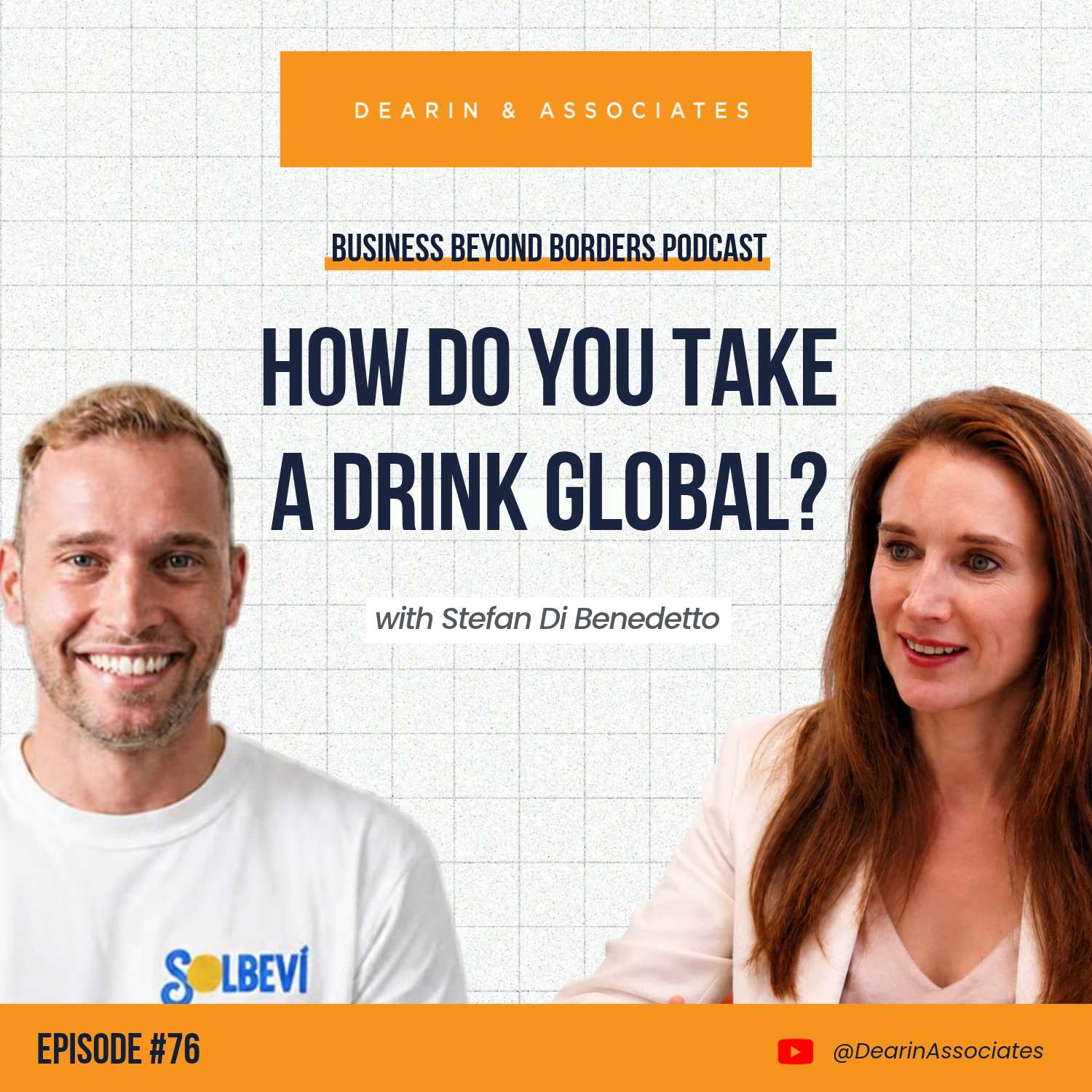
[00:00:53] Speaker B: Going global is really exciting, but getting your product into another country and actually building a market, there are two completely different things. My guest today is Stefan Di Benedetto from Sol Bevy International. Sol Bevy is an Australian consumer brand that's expanded into markets including New Zealand, Malaysia and Singapore, and Thailand and the Philippines are now on the horizon. What makes Stefan's story really interesting is that he's not looking back from the end of a perfectly polished international success story. He is right in the middle of it. There have been exciting moments, markets that haven't worked, distributor relationships that haven't exactly gone to plan, and some hard lessons about what it really takes to create demand in another country. I'm looking forward to unpacking it all with Stefan today. Stefan, welcome to the show.
[00:01:34] Speaker A: Thank you. Thank you for having me.
[00:01:36] Speaker B: Take us. Take us back to the beginning. I want to know what made you think that Soul Bevy could become an international brand?
[00:01:43] Speaker A: It's always been. That's always been, like, the gold, regardless. Like, it was always to build a brand that we can see in every bar and every country around the world. So there was no sort of ifs or buts. It was never just Australia. Australia's a tiny market, let's be honest. It was to take it global from the start. So we've always built the brand and, you know, the formulations, the product, everything about the business as such has been built to scale and go global.
[00:02:04] Speaker B: And so when you started off, how much did you actually know about exporting at that point? Because you came out of a different industry. Right. You weren't always in the housing construction.
[00:02:14] Speaker A: No, absolutely nothing. Google was my best friend. I did a little bit of, I spoke a little bit with sort of global Victoria and I probably more so global Victoria, but the actual export component like packing lists and commercial invoices and incoterms, all Google. All Google, literally. So I taught myself that way. And then until you throw yourself in the deep and with it you don't really know. So just following the steps, asking the freight companies, what do you need from me? Do you have a template, things like that and making it work that way.
[00:02:41] Speaker B: And how long between setting up the company and starting production and then going exporting? What, what was the gap between the very beginning and the first shipment?
[00:02:51] Speaker A: First shipment would have been 18 months in. We just turned three. 18 months in, yeah.
[00:02:57] Speaker B: So it's pretty, pretty quick turnaround from stand up to actually offshore. Yes.
[00:03:03] Speaker A: Yep, very quick.
[00:03:04] Speaker B: And I think you told me when we spoke before that the international expansion suddenly became very real when you were loading your first container. Can you take us back to that day? What, what happened that day?
[00:03:15] Speaker A: Yeah, so that was for Malaysia. So we had, our first order was a 20 foot container, which I'm sure a lot of people would know that's not normal. It's a pretty big first order.
So that was one of the things like how do you get a container to your warehouse? How do you load it? I've never been inside a container. I don't know what it looks like.
If you had a forklift with a container mast, again, didn't know what a container mast was. If you had to have all those things in a ramp to get in there and load it. But no, we had none of that. So, so what happened? We had a container dropped off and I had a guy in the same facility as me that had a forklift that was gonna lend it to me. Cool. Rock up in the morning at like 6am, go to him, go to pick up the forklift. Forklift doesn't start. Forklift's completely dead. So then I ran around the streets of our Falicia like we went an hour and a half, two hours, just trying to ask business owners, hey, do you have a forklift? Do you have a forklift?
[00:04:04] Speaker B: Can I borrow it?
[00:04:05] Speaker A: And we packed it once, had to unpack it. Cause we stuffed up the Ranger and then had to repack it.
So we had 16 pallets in there. So eight double stacked and then. No, we had seven double stacked and then two just at the front, which, yeah, we had to snap off a bit of the pallet. We had to cut it off because it didn't fit in properly. And we were just so exhausted by this. We just cut the pallet in half and like push the stock in and just shut it and sent it off. It was a whirlwind of a day, that's for sure.
[00:04:32] Speaker B: And was there. Was there a moment when you thought, what have I got myself into?
[00:04:35] Speaker A: No, not really.
I was just kind of like, we have to make it work, don't we? It's our biggest order. It was our biggest order to date in general as a business, let alone our first export order. So financially it was very good for us. So I was like, make it work. And luckily, Doug was a very resilient human being, so he had a lot of answers and solutions, but I'd be screwed without him.
[00:04:52] Speaker B: Yay for Doug.
What was it like the first time you actually saw Sol Bevy on a shelf or on a table somewhere in another country?
[00:05:01] Speaker A: Pretty unbelievable. I walked into Aon as a retailer over there with a guy called Ben from Global Victoria. We walked in and I could see it from a mile away. I'm like, like, oh, my God. Had a big gondola end set up for us and we had all our four packs in our bottles and I was just like, oh, what is going on?
So then to be able to go purchase it in another currency and then walk through the store and drink it was, yeah, awesome. Awesome. It's pretty surreal feeling seeing in another country.
Yeah, we've seen it a fair bit now. Like, obviously it's in Singapore and a few other New Zealand and Philippines. A few other countries now. And it's. Yeah, it blows you away.
[00:05:30] Speaker B: That first time's pretty special though, right?
[00:05:32] Speaker A: Amazing, amazing, amazing.
[00:05:34] Speaker B: It's not all roses, though, because even though you get those high moments, like when you see the product on shelf overseas for the first time, sometimes things don't go quite the way you were hoping. Let's talk about Malaysia, because you've been pretty candid about the fact that it didn't turn out the way that you wanted it to. Yeah. What happened?
[00:05:51] Speaker A: Yeah, it's. It hasn't. And I thought I could save it, but I don't think I'm going to be able to. But, yeah, heaps of lessons learned. Basically we went direct with a retailer because of our product. Like being a Muslim country, it's obviously quite difficult regardless with alcohol. But because of our product, people don't know what it was over there. I don't know what it is. What's classified as from tariff point of view. They're trying to classify it as a vodka, but it's not a vodka. And so, you know, we don't want to pay the highest tax rates when it's lands in the country. We want to try and pay as least as possible so it's affordable on the shelf. So a lot of distributors are like, man, I can't get it approved. It just wasn't working for them. But this big retailer with all their power and no doubt money got it approved. So we said, whatever, we'll go direct with the retailer. They ordered a lot. It actually financially kept the business afloat because we were really struggling in winter because we're a very seasonal business. They wanted exclusivity. I did say no, but what it meant was that, you know, promoting it, trying to sell it into on premise venues, bars, restaurants, things like that, just possible because it's only in with the retail and there's no one that actually distribute it for you. And so you're very limited to what they can and can't do. So we did sampling in store which we spent a bit of money on and it didn't really work well because of their restrictions and we sort of just had ourselves pigeonholed into. Into one retail and whatever their rules were. So yeah, tough market. Obviously being a Muslim country, which I knew that I still thought we could have made it work. But plenty of plenty of lessons learned, Plenty of lessons learned. So it's actually kind of a blessing in disguise because I feel as though it's a great market to fail in because it wasn't really a huge opportunity for us versus Thailand or China, Hong Kong, whatever. Those are the countries. Whereas Malaysia is. Yeah, quite limited. You know, the amount of people that aren't Muslim then is the amount of that can actually afford our products. And you scale it away back at that. It's only a tiny population.
Yeah. So I feel as though it was a good market to fail. And then we also went into expensive.
[00:07:34] Speaker B: So with Malaysia, what was the. Was there a particular moment where a light went on for you? At some point you went, oh, we really have a problem. Or was it a gradual realization? And then at some point you looked
[00:07:45] Speaker A: back and went gradual realization. I think I went over there a Couple of times I'm like, is it moving? It's not moving. What can we do? We try to implement some, some solutions and they just weren't working.
And then it gets to a period of time when you work out, you're just sort of throwing money at money pits. It's just not going to work. So gradually over time we realized and I tried finding solutions to save. I've been trying to find a new distributor for ages to try and help take the grunt of it, but it's just really hard and once you start, you know, if you don't have the performance in store, the distributor can obviously see that. And so they're going to be like, well, why would I take on a sinking ship? Essentially? So our last resort is the Moto GP in a couple of weeks. There's a lot of interest for it, which is great. It's just there's a lot of hoops to get through to stock to MotoGP, so including them having the Formula One last week, so they're super busy. It's a pung. So, yeah, we still try. I'm not going to give up until we're done, but it's not ideal.
[00:08:35] Speaker B: That one's been a tough one. Do you think when you look back at the Malaysia market, because Hindsight is always 2020, but do you think there was something that you assumed about the market that wasn't right or do you think there was something that you misunderstood, that if you, when you go again, you'll know because you now have got all that learning?
[00:08:53] Speaker A: Yeah, I probably, I guess because I don't know too much about export and also the people that I've seen in the alcohol industry or in, sorry, other markets, sorry, other categories that export overseas, they make it sound really easy. They buy it, they put it over there and then, you know, it's the guys over there's job to make it work to act as you over there and sell it for you. And they're a distributor, if they buy it, they have to sell it.
Not the case. You still need to run a social media account, you still need to promote and activate and do this and do that. So all the stuff that we do here we need to do over there. So I probably went in a little bit too complacent, obviously, just not knowing, thinking that it was going to work with the heat and the huge population. But no. So that's a lesson learned. So Singapore, we're investing a lot of money into Singapore, into activating because one, they speak English, which is A lot easier. But two lessons learned. We didn't invest in people or activations or merch and marketing and social media, which now we are over there. So I think complacent and just lack of understanding was, was the reason as well. It's a contributing factor. And look, I would have loved to get someone on board to help us with that but the matter of the fact is we almost went out of business. That that thing saved us, that ought to save us. So we didn't have the money to engage someone to, to help us.
[00:10:03] Speaker B: You know, sometimes those non ideal clients are not the ones that you want to be keeping on forever and a day but they are good in the moment like you say, because they kept and they taught you some stuff that you couldn't have learned from a spreadsheet.
[00:10:15] Speaker A: Right.
[00:10:16] Speaker B: That whole experience.
[00:10:17] Speaker A: Exactly right. They say you learn from your mistakes and it was a huge, wasn't a huge mistake but it's, there's, I've made heaps of mistakes there and I've learned from them. So now we're going into new markets. I won't repeat those mistakes. It's simple as that.
[00:10:28] Speaker B: So speaking of new markets, you went Malaysia, then Singapore and Singapore gave you a totally different.
[00:10:34] Speaker A: Yeah.
[00:10:34] Speaker B: Challenge if you like. So you got the distributor. On paper you'd done what exporters are often told to do but again you ran into a hurdle. So what happened one market over because it was. Well, not same same but different. It was different different but a little the same in some ways in terms of how, where it went to.
[00:10:52] Speaker A: Yeah, we, so I attended FHA and we picked up Scoot Airlines there. And the first question at all those trade shows is who's your distributor? Didn't have one. Were there just to sort of suss out the market.
[00:11:03] Speaker B: Yeah.
[00:11:03] Speaker A: Anyway, I met one of the biggest distributors there, funnily enough and he said no to taking us on. But then when I told him we got Scoot Airlines, he said no worries, we'll represent you.
Yeah. So it was a bit of a whirlwind. We're stopping all Scoot Airlines worldwide which is a huge, obviously a huge account and a huge win. But then once it sort of went on the planes and did its thing, a distributor stopped responding to us. One of the, one of the biggest distributors went bust and all their portfolio basically went to our guy and they were just inundated with, you know, big global brands with huge budgets that are actually moving, you know, crazy amounts of volume so where the least of their concerns. So I couldn't get any calls back, couldn't get any emails back, couldn't get any messages back. I'm like, I want to help. What can I do to push this? What can I. All that sort of stuff. Radio silence. So we're basically going to close Singapore down as well. But it's like no way. I got on a plane, went back crazy, went back into the market and literally just hunted down physically a new distributor, found a smaller guy that runs his own business, funnily enough, works in Craftby mainly. First Spirit brand was us. So a bit of a risk. But what I loved about him was that he actually, it's his own money but he's buying this product.
[00:12:08] Speaker B: Yeah.
[00:12:08] Speaker A: He actually needs to make it work. And he's been amazing. He's been amazing. He splits all the costs with me, like it should be. He actually pays for a lot more than he probably should, which is great too because all he cares about is making sure it moves. So we organized the three day event where I went over and we had three separate massive events to promote the brand and he got it into one of the major retailers straight away and it's been fantastic. But it's funny just that obviously that just shows you how important that partner is over there.
[00:12:31] Speaker B: So when you're walking around the streets in Singapore looking for your new distributor, if that's what you did, waiting like crazy. What was going through your mind as you were making that journey to try and find the new guy?
[00:12:42] Speaker A: Like it was kind of like walking around aimlessly. I'm messaging people obviously back in Australia before I left to say, do you have anyone I can meet? And I went through some old contacts that I met at FHA and then people slowly introduced you to other people. So, yeah, I got this young girl called Russ and I went and met him and he was sort of just kicked it off, I suppose. Very open, honest relationship. But so, yeah, when I was walking around, it's kind of like. And it's happened a few times, I'm kind of like, what am I doing here? Is this like, I need to make this work but am I an idiot for doing this? But that one paid off.
[00:13:08] Speaker B: So, yeah, I resonate with some of these things you're telling me. I think this is. Yeah, this is not uncommon when you're trying to build an international business because there's just so much uncertainty and so many things where you don't know the outcome and they could turn out really, really well or they could be a complete disaster. And sometimes, especially if you haven't done it before. It's really hard to know which way
[00:13:29] Speaker A: it's going to go 100%, and that's what I don't do at the moment. And the now that the bigger that we're getting, people are asking for it is exclusivity. I don't, I've never really done exclusivity because I don't know what these partners are like, you know, like they could completely suck that I'm stuck in an exclusive agreement with them for two years and then I'm screwed.
So now that's starting to happen. We're getting a lot of people asking for it, like our new market, which I'm flying to tomorrow, which I can't talk about. They want exclusivity. I can understand this one because it's a huge market and I need them to have my best interest. But I'm not signing anything until I meet them in person. Hence I'm going there 100%. Yeah. So it's one of those things. You just. The people, the most important thing, they're representing you. They're your brand. You've got to be able to trust them, look them in the eyes and shake their hand like, yeah, cool. I know you did the best for my business and the best for your own business and, you know, screw me over.
[00:14:19] Speaker B: It's like getting married in a way, isn't it?
[00:14:21] Speaker A: It really is. It's like bringing them. Yeah. Stuck bringing shareholders, aren't they? They're an extension of your business. They own a portion of your business overseas in a way. So, yeah, if they're no good and you're tied into a contract with them, it's pretty hard to get out.
[00:14:34] Speaker B: This episode is brought to you by ofx. One of the things we see all the time with companies expanding internationally is that the strategy might be sound, the market choice might be right, but the financial plumbing is just not keeping up.
Managing global finances can quickly turn into juggling currencies, unpredictable cash flow and far too much admin.
OFX helps take that friction out. They're trusted by more than 37,000 businesses worldwide, and they make it easier to pay international suppliers and teams in local currencies while saving on FX fees and simplifying the administration through one platform. If your business is operating across borders, OFX gives you clearer visibility and more control over your cash flow. You can find out
[email protected] and we'll put a link in the description. So, on that note, what do you think a distributor should actually be responsible for and what does the brand owner still have to do? And then I think sort of part B of that question is knowing what you know now, what kind of conditions do you think you'd require to give somebody? Exclusivity question.
[00:15:43] Speaker A: I think on our, on the brand side it is you, you have to be responsible for marketing. Obviously we usually try and split that sort of 50, 50 with our distributors because again it's in their best interest. So Singapore for example, listing fees into cold storage. We'll go 50, 50.
Then you know, running ads and stuff will pay for because it's sort of above the line. But then in store stuff will split 50, 50 activations. We split 50, 50. At the end of the day they're buying their stock as well. So they are responsible to make it work. And that's, to be honest, that's the main thing. It's just, it's marketing. But all the above the line stuff, I think the distributor is responsible for obviously keeping the brand safe and not going against the brand guidelines or anything like that. Obviously warehousing, storing it, selling it like that's the job. Sell the product, get it into the right places, follow the sort of, I wouldn't say rules that we, we provide, but follow what we do here over there. Have the right activations, have the right displays, the right artwork, the right everything that's in line with our brand and our values, our vibe, everything like that. So they're responsible for that. So is their main thing sell the product?
[00:16:44] Speaker B: Yeah. And for exclusivity, what would you. I don't know if you can talk about that but you're like, I don't know.
[00:16:49] Speaker A: I think, I think, I think they have to have a pretty big like. So I said I set KPIs if they want exclusivity, that's what I'm doing over in this new market. Not small KPIs either. I think they need to have multiple regions. Like they may be a decent sized business. They have multiple regions and multiple like great amounts of reach and they can actually accident. So if they're a bit smaller, it's a bit of a risk. Well then I'm not giving exclusivity. So yeah, they need to have some real firepower I think behind them and mutually like agree to everything that we sort of put forward. Being like, you know, 50% of marketing, all that sort of stuff, it's tough. It's also on a big gut feel as well. I mean, you know, it's like when you meet people, you sort of have this gut instinct on what the person's like. If you can trust them, if you can trust them to do the right thing, then it's worth considering.
[00:17:32] Speaker B: Gotta have chemistry.
[00:17:33] Speaker A: Exactly. Like a marriage, like you said.
[00:17:36] Speaker B: Hey, so you talked about, you know, how in Malaysia people didn't really understand what Seoul Bevy is. And maybe you just want to give a little pitch for what Seoul Bevy is because I'm thinking there are going to be some people watching this saying we'll put a link in the show notes but like, hey, what is so Bevy, do you want to just say briefly what it is? And then I have a question for you about getting people to understand what it is overseas.
[00:17:57] Speaker A: Yeah. So essentially we make two products. We're alcohol business. We make two products in various formats though. We have a limoncello liqueur which is a family recipe of mine from, from Italy that we make here in Australia. And then we created the world's first limoncello spritz and a can which is what gets the most attention overseas and is the product that gets ordered the most unique.
[00:18:13] Speaker B: And the spritz is really what people in Malaysia didn't quite get, even in
[00:18:18] Speaker A: cello, for that matter.
[00:18:20] Speaker B: Really. Just because it's not culturally something that exists in Malaysia. It's an Italian.
[00:18:25] Speaker A: Yeah.
[00:18:25] Speaker B: So I mean, what have you had to learn that you didn't expect when it comes to this education piece? Are you surprised by how much you had to do to get people to really understand the value proposition?
[00:18:34] Speaker A: Not. Oh yeah, a little bit. Like I knew and I still do know that every Asian market we go into, education is the most important thing for us. So we have to invest a lot of money into educating the market. That's really important. Kind of like we did here when it first started in Australia because like Soncello are a massive help in building that education. But at the start, people still ask us what limoncello is so very similar to here. But I think my theory was just like it worked here. If people try the product, they'll naturally like it. They don't necessarily care what it is, is it tastes good, they'll buy it. And I thought over there, hot climate, really high flavor, high profile flavored foods. Lemon flavor goes really well with that. It's refreshing, it helps palate, cleanse. It's perfect for that sort of market. So they try, they like it, they buy it, it's sweet. But that wasn't the case with our sampling we did in Malaysia. So. And there's a number of reasons why that didn't work, you know, like I found out. And this is the other thing. If you're not there, you don't have someone to represent you there properly. You sort of just relying on these people to do the right thing. They were serving limoncello spritz warm. I hadn't even been in a fridge. Yeah.
[00:19:31] Speaker B: Oh, no.
[00:19:32] Speaker A: So I found that out from a. On the customer after like 13 weeks of sampling and all this money that I spent. So. Yeah, so that makes a huge difference, obviously. So that probably ruined it for us. So again, lessons learned.
[00:19:42] Speaker B: That's like serving champagne hot or charades at 5 degrees.
[00:19:47] Speaker A: Exactly. So now like in Singapore, that's the thing about having our distributors, like I went over and I educated about the product, product and teach him and all that sort of stuff.
[00:19:53] Speaker B: Yeah.
[00:19:53] Speaker A: So then when he goes and presents it, both liqueur and the spritzer served cold and he tells you the origin story and why it's different. Both products are different to your average.
[00:20:01] Speaker B: So anyway, was there anything, anything that you did in Australia maybe marketing wise, that worked well and then when you tried to take it overseas, it just didn't translate?
[00:20:11] Speaker A: We definitely haven't marketed overseas as much as we have here by not even remotely, which is an issue. So it's saying that we're now obviously changing.
We're changing. We've got to set up new social media accounts for Asia because we're restricted here to only Australia because we're alcohol and a few other reasons. So we've got to start doing all that, implementing that and then finding local influencers, for example, to make content for us, because making content here is not necessarily relevant over there. So I think social media is probably the one that we need to work on a little bit more to follow what we do here in Australia. So I think we do a good job at it here.
[00:20:41] Speaker B: And what are your thoughts on how you adapt Soul Bevy to another market, taking into account the differences but without losing what made Soul Bevy successful in the first place? Like, what's the secret sauce to going, here's the core concept, but here's how it applies somewhere else.
[00:20:59] Speaker A: Question. Good question. I think for us it's all focused on how we present the product, like the branding associated with it and the, the vibe or the feeling that it's meant to give. So that's what we try and relay because it's the same everywhere. Like we're meant to be, you know, beachside destinations, night people relaxing, enjoying themselves, not drinking to get drunk, just drinking to enjoy Socializing with their friends and family and spending, like creating joy with the people that matter the most, basically.
So that is something that you can take anywhere, especially in Asia, where universal. Think. Think about the tropical climates there. It's beautiful. So like Thailand, for example, it's perfect for us. Beautiful beaches, hotel resorts, palm trees. Like, it makes sense for us to drop our product into a market like that because the branding associated with is super easy. So when we do, when we do activations, the branding replicates the same here. Our yellows, our whites, our blues, as you can see on the surfboard, that's all the same. We drop that into those beautiful destinations and it just gives that nice feeling, which is what we're trying to do. And then the product is the addition to it.
[00:21:55] Speaker B: I want to just switch gears for a minute and talk about the human side of this, if you like. When we talked before, you said to me that the last couple of years have been pretty rough. What do you think's been the hardest part for you personally?
[00:22:10] Speaker A: Just the. It's just relentless in terms of time and effort. I haven't had a day off in now maybe seven weeks maybe, or maybe a bit less. And we've got everything until the end of the year. We're working every single day until the 13th of December. That's pretty relentless. Doing that and earning your own money makes it a lot harder. If I was making squillions of dollars, it'd be somewhat, you know, bearable, I suppose. But the issues.
Yeah, you don't when you first start. So as a startup, so that's probably the hardest thing.
[00:22:35] Speaker B: Was there ever a point where you seriously thought, maybe I shouldn't be doing this, I should be back, you know, in a more comfortable industry.
[00:22:43] Speaker A: Right now?
Yeah, right now. Going through a phase.
[00:22:47] Speaker B: So right now, what keeps you going?
[00:22:50] Speaker A: Just the dream, I suppose. Like, yes, I've invested so much into this, but you can make money anywhere, so I'm not worried about that. It's just the dream. Like, I want it to be a success, I don't want it to be a failure. And I really think it can work. It's just we're learning every day on how we can make it grow and make it better. So I just got to find that secret sauce that's going to make it really blow up. But, yeah, and I've always just been a bit of a hard worker, so is what it is. I put myself in this situation, I need to make it work.
[00:23:15] Speaker B: And I think, look, often when we're on this Entrepreneurial journey. There are lots of days that are really difficult because we're in it, you're in it at the moment and you can't actually see how far you've come. It's really hard to stand back and go, wow, we've come a really long way since that first day when we stood up the company. But you think about where you are now and you're looking at, you know, new markets. Thailand, the Philippines, whichever one you're flying off to tomorrow, which I'll be watching with interest. If you think about where you've come from and where you are now, how different is the Stefan going into those markets? Getting on the plane tomorrow from the Stefan who, for example, went to Malaysia and had it not work out. How has it changed you?
[00:23:56] Speaker A: Yeah, a lot. I think I've become. One of the saddest things, I suppose, is how I used to get so excited, obviously, that first time seeing the product in Malaysia. The sad thing is you kind of get a little bit used to it. So they don't excite me as much anymore. Like, it's exciting, but it don't. Like, we might get a massive win. Like we got a big win the other day. I'm like, yeah, cool. Business is normal, you know, like business as usual. That's the sad bit. Like, it's. We've just had so many amazing moments in this business, like Qantas and new markets and major retailers, 100% ranging, crazy things. New York jets, wild. So it's become so sort of normal, which I don't. Which is. I try and remind myself that, like, that's not normal. Launching into these new countries is not normal. So I try and remind myself that. So that's probably the bad thing is I've gotten too complacent, I suppose maybe, or too used to it.
[00:24:41] Speaker B: Do you think, though, that maybe because the highs are not as high, the lows are not as low. So that's been my experience. Over time, you do get a bit less excited, but when things don't work out, you also don't want to open up, just jump out as much.
[00:24:56] Speaker A: Yeah, yeah. Again, you had it exactly right. We had a big loss the other day, but I was kind of upset, but I'm always like, whatever, we'll find something else, you know, like. Yeah, exactly. Right. You just sort of. Yeah, you just keep moving on with things and take. Every day is a new day. That's my motto. Every day is a new day. Just get up and go at it again. So it's. It's changed me a little bit. It's definitely made me more resilient, that's for sure. I didn't really realize I could not give up this easily. So. Which is good.
[00:25:19] Speaker B: That's a really good lesson.
So just in terms of advice for other people, because there are going to be other people who are on a similar journey who are listening to this and watching this. Imagine there's another, well, founder, maybe an Australian founder who's listening to this, who's just gotten their first serious inquiry from a distributor overseas. And they're really excited and they're thinking this could be our massive international breakthrough. What would you tell them to do before they sign on the dotted line?
[00:25:44] Speaker A: You have to do some pretty serious due diligence. You need to get on a plane and meet these people. That's probably my most. My biggest thing. You need to go visit the market, understand the market, walk in the streets, go into, like, for us, a bottle shop or a bar.
Do your digging on who the person is, obviously, and get in touch with people that have done it before, like even just using the government or using. Using someone like yourself or using the government entities and the resources we actually have. And a lot of people are hating the government at the moment, but they do have good things, like Global Victoria have been amazing to us and have been very supportive to us.
Use them. They're free resources and they're there to help you. So I would just, yeah, just be cautious. Make sure you're ready for the hard work and then make sure you have enough money. Money makes all the round. Need money.
[00:26:25] Speaker B: Totally agree. And any final thoughts before we wrap? Anything that I didn't ask you about that I should have asked?
[00:26:31] Speaker A: No, not really, actually. Just don't make the same mistakes I did, that's all. But it is also the coolest thing you can do, like getting on a plane and landing in a country and a different country and seeing your product on the shelf is one of the coolest things you can ever do. Like, it is so satisfying. It's kind of hard to put into words. So whilst it might be tasks, do it. It's awesome.
[00:26:52] Speaker B: I love it. Stefan, thank you so much for coming on the show. Thanks for being so candid about the journey. It's really refreshing. I sometimes get people on here and they never want to talk about anything that was difficult, anything that went wrong. But anybody who's been in this game a while knows that it looks pretty glitzy from the outside, but you don't really want to see how the sausage is made. So I love that you've just come on and shared what's been happening for you and how you've dealt with it. And I'm so excited for what comes next. And I will be following Soul Bevy on its journey, especially through social media. We'll put the links to your page and you can let us know anywhere else. People should get in touch with you. And, yeah, I just wish you every success with it.
[00:27:31] Speaker A: I really appreciate that. Thank you for having me. And then I'm just trying to be open and honest as I can. There's nothing to hide. Yeah, we failed in the market. Who cares? You go to the next one.
[00:27:38] Speaker B: Totally, so totally.
[00:27:40] Speaker A: Thanks for having me.
[00:27:40] Speaker B: All right, let's wrap it. Building a successful international business takes more than just choosing a new market. If you're ready to expand internationally, we can help you to decide where to play, how to enter, and what it's going to take to scale successfully. At Dirin and Associates, we help ambitious companies build and execute the right strategy for international growth. Book a discovery call with us on our website. You'll find the link in the description below.