[00:00:00] Speaker A: If I'm midway through an assessment and it detects that I'm at risk and a higher risk of suicidality, it will either stop me in my tracks and say, stop, you need immediate support and assistance. It will actually then alert my clinician, bianca's at risk. Please. We need to make contact with Bianca in the next 24 hours to make sure that she's safe. That experience gave me the full body chills. So when you think about how that that's all sort of culminated together for me, I was like, where do I sign?
[00:00:24] Speaker B: Around the world, mental health systems are under enormous pressure.
Demand for care continues to grow, while the number of clinicians available to provide
[00:00:32] Speaker C: that care struggles to keep up.
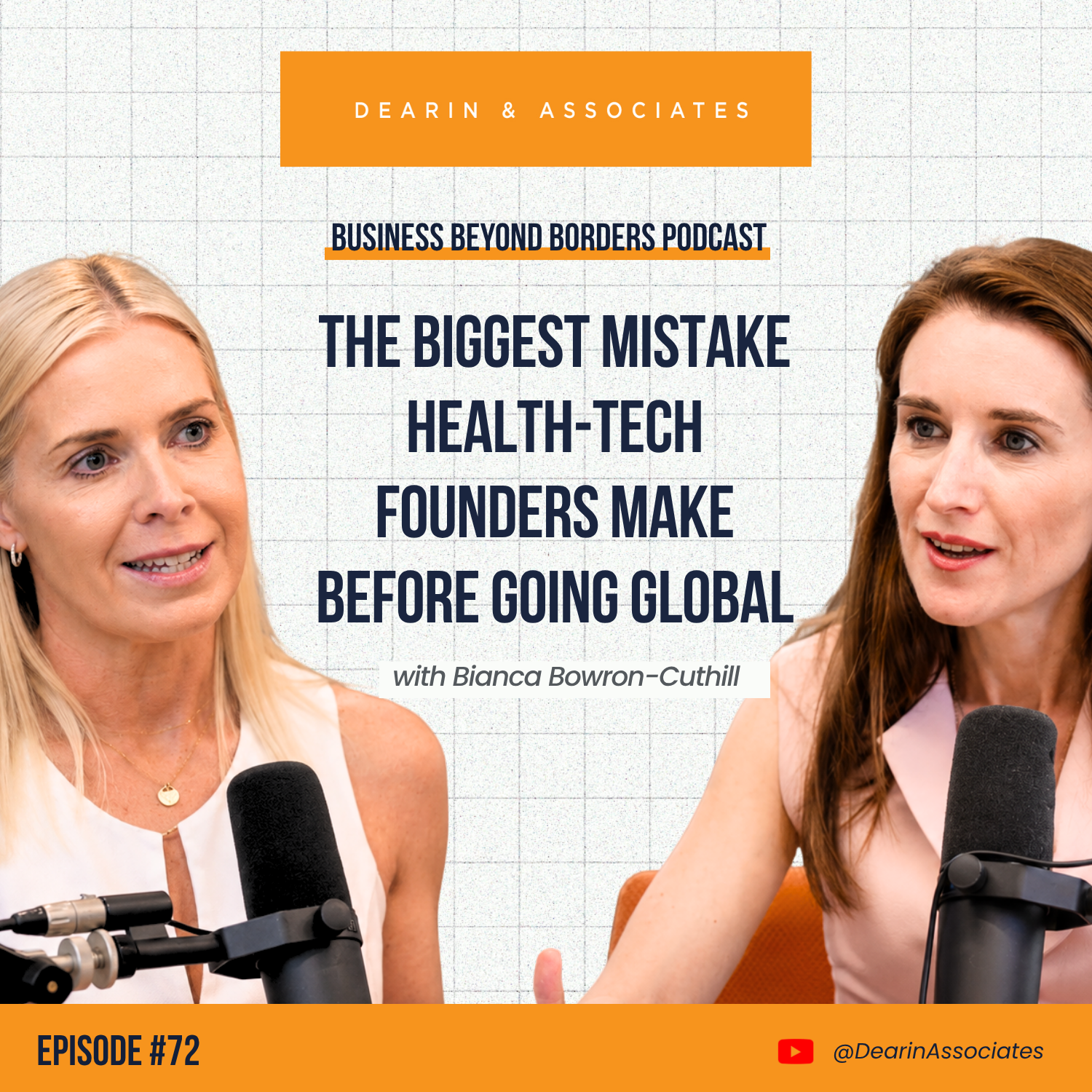
[00:00:34] Speaker B: My guest today is Bianca Borun Cuthill, CEO of Innerwell, a digital mental health platform built on more than a decade of clinical research. Bianca joined the company with a mandate to turn that research into a globally scalable technology platform.
[00:00:49] Speaker C: In today's conversation, we explore what it
[00:00:51] Speaker B: takes to commercialize health technology, scale digital platforms internationally and bring innovation into complex healthcare systems.
[00:01:00] Speaker C: From your perspective, what's the scale of the problem that we're trying to solve?
[00:01:04] Speaker A: That's a really good question. So I think mental health has a lot of funding being distributed across a range of different countries. Globally, we're seeing millions, if not, I'd say an aggregate level, probably billions of dollars being allocated to mental health. I think the challenge, though, is that it's actually affecting more and more people. So the more money that we throw at it, the more, the more complex, the more people, and possibly mainly due to awareness. But I think there's also a number of organizations who are really getting behind it to really help, which I think is actually the positive that comes out of all of this. I think for me, what I've looked at coming into this industry, you know that I'm relatively new to the mental health industry.
What's really great is I think what it's doing is it's actually shining a light on mental health in a positive way, but also trying to help reduce the stigma that I think has been associated to mental health. And so, for me, I look at it, whilst it's still a challenge, it's also an opportunity because the more organizations that are working collaboratively together, the better, the better the outcomes that we're going to be delivering.
[00:01:58] Speaker C: Do you think it's a global problem or is it more pronounced in some places than others?
[00:02:02] Speaker A: No, I definitely say it's a global challenge. I think different countries have a different approach to how they're actually solving their mental health challenges in their different organizations, sorry, in their different, you know, their different jurisdictions around the world. I think what I'm, what I'm seeing is you've got different countries taking different approaches on how they want to solve that challenge. What I think we all recognise, and if, you know, for inner world in particular, we're based in, you know, Australia and Canada for the moment, and in Canada as an example, they're actually really mandating at a provincial level, measurement based care, which is really the premise behind what the inner world clinical platform does. And the way I would describe that measurement based care, it's like, you know, we measure our blood pressure, we measure our blood sugar levels, you know, and that's very standard in all other aspects of healthcare. But when it comes to mental health, how do we measure whether we're improving or whether we're, you know, our mental health's declining? So measurement based care is a methodology that's been introduced through the Brain and Mind center and Professor Ian Hickey and his researchers over decades of research.
And what we're seeing is that it enables you to actually truly measure how you're responding to treatment. And you've got countries such as Canada who are actually mandating measurement based care at a provincial level, which is wonderful because they're really leading the way in many aspects and Australia is obviously not far behind either.
[00:03:19] Speaker C: What kind of things are getting measured in measurement based care?
[00:03:22] Speaker A: So I think in measurement based care, and I'm not a clinical professional, so I come at it from a technology platform, so I'm just going to full disclosure from that perspective. And so some of the areas that what you'll see in measurement based care is, you know, you've got assessments that have been standardised again, whether they be, you know, standardised across different principles across the world, but mainly in the, in the area of psychology. And so when you looking at the way you can standardise those assessments, what that enables you to do is to establish that baseline. And so once you've got those standardised assessments, assessments, they're those elements that we build into the clinical platform and by building in those assessments across the clinical platform that can include various areas of our mental health, such as it could be social connectedness, it could be the level of sleep, it could be the way that we connect with society, it could be mood, anxiety, depression, you know, there's various different sets of scales and so by tracking those different areas, that's how we can actually, you know, track whether we're improving or whether we're declining in relation to our mental health.
[00:04:18] Speaker C: That is fascinating and it sounds quite new from an Australian point of view.
[00:04:24] Speaker A: Yeah, it is. And so I think Innerwell, you know, Innerwell was actually born from a research grant that came out of Sydney University towards the end of sort of 2018, 2019 in those early sort of stages. And as part of that, that really, that research that was driven through Sydney Uni's Brain and Mind center and their early, and that early team, they did a number of different research papers to really understand what, how can we actually truly measure the impact of mental health? And particularly as I was saying earlier, the amount of funding that's been directed towards mental health but what impact is it actually having? So if you think about in Australia, you've got PHNs who effectively commission all the federal funding across the country to lead agencies and then different service providers. And what they're all looking for is to be able to measure, well, if we've allocated a million dollars, two million dollars, whichever the actual amount is, how do we actually measure the outcome that we're delivering and the impact that we're creating? And technology plays a really critical role in that because we know that these challenges can't necessarily be solved by just more people. You know, you've got a system that's under strain where it's got more demand than it actually has clinicians that can actually service it. So that's where technology really comes and plays a role and really helps you to sort of scale, you know, scale to help those different people that are in need.
[00:05:37] Speaker C: Now you have spent a lot of your career scaling technology. What was the catalyst for having you decide to step into the mental health technology space?
[00:05:47] Speaker A: It's a really interesting question. It's something that sometimes you question yourself. You go, you know, I definitely have had A wonderful for 25 years in tech across a range of different industries and you know, mental health has absolutely been the most challenging one so far. And I think because it's a purpose driven space where people are here because they know that there's an impact, they might often have a lived experience and a story and how they really want to connect back with making a difference and helping people. And so for me, when I look back at my career, I've worked in accounting tech, I've worked in legal tech, I've worked in DevOps and you know, and work with developers, enterprise, small business, you know, all, all sorts of different size size organizations and client, their client profiles. And so when you look at mental health, we're Talking public health, we're talking private health systems insurance. It is such a range and it's a whole new myriad of an industry to really wrap your head around. But for me, like, I really love that challenge and when I think about the, the roles that I've had in the lead up to this, this particular role at inwell, and it's really exciting because it's been a culmination of years in tech across a range of different disciplines that we can now bring that forward and take that true technology focus in how we're going to help scale the impact in mental health, as opposed to having me looking at it through a purely clinical lens. Because obviously that's not the expertise I bring, but the people that I work with, they bring that clinical expertise. So you power the technology and the clinical insights together. That's how I think we can make a real difference.
[00:07:11] Speaker C: That's really interesting.
When you first came across the company, when you first encountered Interworld, what did you see that convinced you that the platform could become a global business? Because obviously that was something that attracted you to the role. So what was the thing that you saw that made you go, this could be it?
[00:07:29] Speaker A: Absolutely. So I remember in my early sort of conversations, in the discussions before, in talking through the CEO role, one of the elements that I'm a product person. I'm a person who cares deeply about customers, I care about technology, technology. But I would not describe myself as a technologist. I love technology, but at the end of the day it's the people who use the technology is what I care most about.
So when I was first exploring the opportunity, I really wanted to have a look at the product and the platform. And I said, can you show me what this product actually does? And they're like, yeah, sure, we'll send you a little video. And so I remember being sent this two minute video and what the video showed me at the time was how the platform will actually alert and how it truly can actually help to reduce the risk of, of suicidality in individuals. And for me, when I watch the video and how when you're in the. Midway through an assessment, if I'm midway through an assessment and it detects that I'm at risk and a higher risk of suicidality, it will either stop me in my tracks and say, stop, you need immediate support and assistance, contact triple zero, lifeline, et cetera, or it will actually then alert my clinician, Bianca's at risk, please, we need to make contact with Bianca in the next 24 hours to make sure that she's safe.
That experience gave me the full body chills, like, you know, the goosebumps.
[00:08:43] Speaker C: I'm getting goosebumps caring about that.
[00:08:46] Speaker A: And it's really rare, like I'm doing it. Yeah, it's not this room that's really rare because I think, you know, I'm a mum of two kids and teenagers and you think about, you know, we're really focusing on youth mental health as a core focus area for us and as a mum, that's even more important because I think about all the roles that I've had in tech are always been amazing and I've loved everything that I've done. But in this industry, you think we are really helping to change people's lives for the good and that's, that's rare. So when you think about how that, that's all sort of culminated together for me, I was like, where do I sign? This is, this is amazing in terms of that purpose driven space because there's so much that we can do. And you know, I think the more great minds that you have working to solve this, this challenge, that that isn't getting any better. If anything, it's, it's getting worse in a sense because I think more people are becoming more aware of it. But the more people that work together and link arms to actually join forces, that's how we're going to make a huge difference. So that's, for me, one of the many reasons obviously why I sort of signed up to that challenge. And you know, I think there's so much more that we can do. But there's a lot of super smart people and incredible people who've dedicated their life's cause to really making a difference in this space. So more than happy to jump on, jump on board and do what I can do to help.
[00:09:57] Speaker C: And I'm guessing a lot of the people who have dedicated their life scores to the work are in the academic space. Right. So they're researching and figuring out the methodologies. What's the, what do you think is the hardest part of turning that research into, you know, something that you can use on your phone and that can actually save people's lives?
[00:10:17] Speaker A: It's a really good question and I think you've got, you know, we're very fortunate, you know, with our really strong relationship we have with Sydney University's Brain and Mind center. And so when you've got the power of so many academics and researchers who've been doing this for, in some cases decades and you know, they are deeply passionate about the Research and the different tools and techniques and services, solutions, it is a myriad of different things.
What it is a case of then working through as they do that research, then having them make those recommendations to say, okay, based on these research studies, based on these research papers, these are the findings, we now want to effectively codify this into a technology platform. And so that relationship we have with, you know, examples such as, you know, Professor Ian Hickey, Dr. Frank Aofino and Hayley Lamonica, they're the three key players that we've worked with over the number of years. Those three, we meet with them regularly to help understand what is that research and what are the elements that we believe need to be incorporated into the inner world platform. And that's where you see the value then of the innovation that that relationship really brings. Because being in an academic world is very unique to being in a commercial software world where you're trying to scale platforms on a global level. And so I think that partnership is really unique because you don't have someone who comes from a pure technology background saying, this is what I think we should do. You've actually got years and years of research that, that's grounded into, that has been validated to say, okay, this is what the research is telling us will work, will make a difference. Now let's build it into the platform to then ultimately scale that for the better, for the better of all of our users.
[00:11:50] Speaker C: And how do you bridge that gap? Because in my experience, people who are working in the academic field are often coming at things from a very different angle to somebody who is a technologist or a product person, or a branding and sales and marketing person.
How do you, as the CEO, actually bring those academics along? Because obviously they're very, very bright, but they might not necessarily be looking at the project in the same way that you are. You know, they're looking at it from a research basis. You're looking at it as, we have to make this thing commercially viable or it doesn't matter how good the research is, nobody will ever actually get to benefit from it.
[00:12:26] Speaker A: That's exactly it. And I think, and that's, I think that's a challenge in every, in every business, to be honest. I think because you, whether you're a founder, whether you've come from, you know, academic, an academic sort of background, the way I approach that, just in terms of any business, any particular business challenge is really through, you know, great relationships, great partnerships and trying to set them up in that win, win, you know, that win, win sort of outcome. Because When I think whenever you're doing business, everyone does business with people that they like to do business with. And all things being equal, if it comes down to whether it's a shop, whether it's an item that I'm purchasing or a car or whatever the item might be that you're choosing to purchase, if all things are equal, you're always going to go back to that person that you've got a really strong trusting relationship with. And so when I look at the relationships that we're building and establishing, you know, in Australia and in Canada, you know, as an example, it comes back to those trusting relationships because if we can then help the university achieve their objectives, which is mainly, you know, additional research, published studies, so they're really showing the academic world the impact that they're having and we're providing that platform for them to sort of expand that, that is truly a win, win outcome. And as you said, the way that we both win is that the longevity and the more additional users and growth that we see in the inner world platform is what enables them to really expand the great work and the great research that they've been doing.
[00:13:42] Speaker C: Now it is such an exciting project, but I'm sure it comes with, you know, it's challenges, challenging bits, as you find in any business. When you took on that CEO role and you, you know, opened the door and walked in first day, first week, what was the first problem that you encountered that made you realize, all right, well, we have to solve this before the company can scale?
[00:14:06] Speaker A: Yeah, absolutely. And I think I've had that challenge a number of times now when I think about walking into new organizations and so. And you know, weirdly, I love, I love those challenges because I think I'm definitely someone who likes to transform and what someone who likes to maintain, maintain business, businesses and so within a world. Specifically, when I came in, you know, we did come in at a transformational time and a pivotal time in a leadership transition. So, you know, we were brought in by the board to really reinvigorate the business as we were about to embark on this next, on this next wave of growth. And I think it's really important to acknowledge that, you know, there's obviously a number of people and team members that have come before you to establish that core foundation. And I always say that to the team that you always want to respect the people who've done the hard work because those early foundational years, they are really difficult to, you know, get proved market fit and make sure that, you know, what you're building is what the market needs and there's a lot of time and effort that gets spent, you know, and sometimes they're not. They're not the sexy years, you know what I mean? That's the hard. That's the hard grunt work that's been done way before we've come in. And so, you know, when I came into the business, within a matter of weeks and we were presenting a 2026 business plan, looking at revenue numbers, looking at, you know, growth goals and working out, you know, you know, our finance and our cash burn, and, you know, at the time, you're sort of drinking from the fire hose, going, sticking to my head around this industry. Who are the people who are the competitors? Because you, no matter how much prep you can do before you go into a role, the reality is, until you're in the deep end, it does become that, you know, you've got a fight or flight, sink or swim kind of moment, just to sort of work it out as you go. So we, you know, myself and the executive team, we absolutely came in and, you know, really locked in on some plans and we'd had some really strong handover, which was amazing. But even still being ready for your first board meeting, there's a new CEO backing into what the new 2026 plan would be. All those things, there's a lot of sort of pressure on that. And even this morning I was looking back at some of those plans going, they're actually stuck. We were actually pretty good for three or four weeks in what we set out to achieve. Four or five months later, we actually have delivered upon, which is actually really admirable. I think knowing what we know then, what we knew then and what we know now, obviously that plan would be so much more robust. But you have to be confident to make decisions and back yourself in those decisions. Knowing you don't have all the answers, but knowing that you're acting with the best intent to ultimately drive a business going forward.
[00:16:25] Speaker C: Did that pressure keep you up at night during the first 90 days? Always.
[00:16:28] Speaker A: I remember my family in particular, like I usually have to do with my family. My mum, my dad and my extended family. Every Friday night they'd be like, how's it going? How's it going? I'm like, it's good. I'm like, it's a lot. So my last role was a lot easier because, like anything, when you've been in a role for four and a half years and you've built out a business where you've got leaders and other Things. Things in my last business was incredible and, you know, built it to a point where it didn't need the level of detail from me because that's, you know, you're establishing yourself and that's what scale looks like, is that you're no longer, you know, that sort of, that, that glue that sort of binds everything together to the same extent of when you first come in. But when you're in a startup and inner world is very much like a restartup is how I think about it. You know, you don't have the size teams, you don't have the head of marketing or the head of sales, like you're it. So you're wearing all those hats. Yeah, so it is. It's a lot of change to get across, but at the end of the day, you still have to be kind to yourself and go, I'm only one person. I can only, you know, I can only do what I can do. But, you know, yeah, you roll up your sleeves, you work hard and you know that you're here for the right reasons.
[00:17:22] Speaker C: Oh, absolutely.
[00:17:24] Speaker B: This episode is brought to you by ofx. One of the things we see all the time with companies expanding internationally is that the strategy might be sound, the market choice might be right, but the financial plumbing is just not keeping up.
Managing global finances can quickly turn into juggling currencies, unpredictable cash flow and far too much admin.
OFX helps take that friction out. They're trusted by more than 37,000 businesses worldwide and they make it easier to pay international suppliers and teams in local currencies while saving on FX fees and simplifying the admin through one platform.
If your business is operating across borders, OFX gives you clearer visibility and more control over your cash flow.
You can find out
[email protected], and we'll put a link in the description.
[00:18:13] Speaker C: It seems to me that it's quite a different space that you've stepped into. You know, digital mental health is a new space and different from where you've been previously. What do you think? You know, just apart from the pressure of having to stand it up from where it was, what's the most surprising thing about the industry? What do you. What surprised you?
[00:18:33] Speaker A: Yeah, it's been really interesting for me, I think, in terms of, like, when and it's. It has been a really interesting space to step into because it's very different to what I've been exposed to, you know, over 25 years. And I think what's been really different is for me, working through just Health care in Australia. I'll use Australia as an example. Working and navigating health care in Australia I think is very. Is complicated because it's complicated for a range of reasons because you've got different sort of funding models you're not dealing with. You're not necessarily dealing with, you know, a director or a business owner who can make that decision in the moment. And that, that is different when you have been used to that kind of model for the, you know, the past 20 or so years where, you know, Cynthia wants to purchase software, Cynthia's a decision maker. We can have a conversation, we can, you know, work through what's the problem that you have.
[00:19:20] Speaker C: Do a demo.
[00:19:21] Speaker A: Exactly. All the things that we're all used to. But in, in healthcare it's a lot more complicated than that because obviously you're working with sensitive, you know, sensitive information, particular mental health, that can be quite sensitive. The decision makers or the, the end users, like I'll use clinicians as an example, are not necessarily the decision makers. And then if you're working with public health or public money, you've then really got to follow a very protracted sort of paper trail and audit trial in terms of how people are actually getting access to that funding and what they need to demonstrate in order to show value and evidence that that funding has been well used. So all really amazing things and super important things. But it can actually means, you know, when you used to someone who's working at speed and pace, which I'm used to, that has definitely been an adjustment that you need to sort of recognize that these things don't move as quickly as you'd like them to. But that's okay because there's good guardrails in place and reasons as to why they're operating in the space and the pace in which they are and learning how to navigate that, you know, navigate. Who are the decision makers, who are the people you need to speak to because. And what is the information they need in order to say yes, this is absolutely the solution for me going forward.
[00:20:30] Speaker C: And Inu El's now deployed into at least one of the international market, right?
[00:20:35] Speaker A: Absolutely, definitely.
[00:20:36] Speaker C: Tell me about that. What's that experience of going into another healthcare system been like?
[00:20:41] Speaker A: It's interesting, particularly when time zones aren't on your. On your side. So when. So week three in the role, I headed over to Toronto in Canada and you know, at the time I was hiring for a new, a new country leader.
And as part of that, it was a case of like, hey, it'd Be great. We had two clients, two or three clients at that stage, already established in Canada. And it's like, great chance to meet them, get to know them, all those sorts of things. I was like, fantastic. Booked my flight, off we went and a conference and attend a conference while you're over there. The biggest challenge with that is you realize that Canada is the same size as Australia, really, from the market and the time zones. All the people that I wanted to connect with, none of them were in Toronto that particular week. They'd been in and out of the conference. And because I had been in the business for a hot minute, all my meetings were basically on zoom, you know, zoom calls. I was like, okay, great. So I've flown all this way to do a bunch of zoom calls. But it actually, I think it helped me by being on the ground, even though and, you know, attending different conferences and different meetings, even in person, it does still give you that. That real deep, I call it that deep customer empathy. Because you can try to develop that empathy from the other side of the world, being here in Sydney, but nothing is, you know, there's nothing that is better than actually spending time with clients or other, you know, networking with other peers, meeting people face to face, being in the same rooms as others, and particularly if you think of as a conference example, being in the same room as others and hearing what some of the challenges are and, you know, having chats and the breaks and different things from there. And what I came away from that, that week on the ground was, you know, a really great understanding of the market challenges. The same, similar, the similarities, the complexities, but also some really great contacts. And now we've actually got someone who we're working with. So I've now since appointed a country leader, which has been a breath of fresh air. And she's amazing, but she also has that local jurisdiction knowledge. So you've got myself with sort of more the business organizational structure and platform knowledge that we're trying to build. She actually has that local domain expertise and knowledge and, you know, and the connections that I've now sort of warmed up for her. She's like, this person's a unicorn. Bianca, thank you. And I said, I just sat next to them at a conference and got chatting to them. But this person, you know, they. They're French speaking. They can help us in Quebec. And that's where, you know, when you think about Canada, you've got Quebec, which is French speaking, and then you've got the other side of the country, and they're two Similar, but very different, you know, sort of ways that they operate is what I keep getting told.
So being able to have those kinds of contacts and establishing on the ground, it's like speed dating. You get to meet a bunch of people in a really short space of time. So I think that there's nothing, nothing will ever replace. I think being on the ground for a short period, even for a short period of time and that deep sort of immersion and that's, I think what, what I'd encourage every, every leader who's exploring a new country. That's definitely, I think you can't get any, anything better than that deep, that deep empathy and that deep immersion for that experience.
[00:23:28] Speaker C: I always think of Australia and Canada as being quite similar. If you leave aside that French, English, bilingual piece, what have you seen in the mental health space that's different between the two countries?
[00:23:40] Speaker A: Yeah, it's a good question, I'd say, given that we're both Commonwealth countries and, you know, everyone's very familiar.
You know, we speak lovingly of the Canadians, the Canadians speak lovingly of Australians. And I think that, and I felt that, you know, in terms of being on the ground, once I picked up my accent, they were like, hang on, you're an Aussie. I'm like, yes, I am. And obviously I've got quite a broad, broad Australian accent. So in doing that, I think straight away there was an instance sort of affinity, which is really positive. In terms of the differences in the market, I'd say it's interesting for us, initially, our client profile between the Australian clients and the Canadian clients was actually different. Which, you know, I wouldn't say was a strategic reason as to why it was different. I think it was almost like an accidental reason in terms of how it just became to again, establish established foothold in Canada.
[00:24:26] Speaker C: That's quite interesting though. Yeah. Because a lot of people wouldn't pick that up. They'd assume, oh well. I mean, people are always saying all Australians and Canadians are basically the same, just with a 40 degree temperature difference.
But clearly that's not right.
[00:24:39] Speaker A: No, and I think, I think it's. What's really interesting is there are definitely similarities in the services that they're trying to offer, particularly when you think about youth. So if I use Headspace as an example. So Headspace is a great example in Australia that supports youth specifically around their mental health programs and there's hundreds of them scattered around the country.
Canada has a similar sort of model in different sort of ways and again, it's run through different, different Sort of, and run and funded through different sort of mechanisms. I think what's been really different about Canada, which has been amazing, is that as I was saying earlier, they're a little bit more further advanced in their recommendation of measurement recommendation and I'd say mandating of measurement based care and that's really coming at more of a federal, a federal and a provincial level for them because they've already seen the value that if measurement, if mental health funding is being allocated that there is measurement based care in place to be able to validate and measure the impact and the results and the return on effectively the return on that investment or the return on that spend. So I'd say that's one of the differences I've seen in Canada so far. But at a client by client sort of profile level, interestingly in Canada our initial, our initial sort of wins are actually more like larger hospital research kind of settings. So. And again, you know, I attribute that back to the really strong relationship between Sydney University and their counterparts in Canada because some of those relationships were with London Health Sciences and some research pizzas there. Douglas Health, you've got Alberta Health Services, University of Calgary. So some really great research related partnerships and that's what I've seen has been quite different. Whereas now in Australia we've got an established foothold, people know us, they know that even the new inner world team and the refreshed revigorated, there's a lot more velocity coming out in terms of the product and improvements. So it's re establishing trust but also recognizing that the same platform can still scale globally, which is also unique in many ways as well.
[00:26:36] Speaker C: And scaling globally is a very, very big project. It is. Has there been a moment so far where you realize this challenge might be a little bit bigger than I thought it was?
[00:26:46] Speaker A: I think we all have those moments. I always say to people, say if you haven't questioned yourself and going why did I step into this challenge? You haven't pushed yourself hard enough. And I love testing myself in that way because when you're out of your comfort, like for me when you're coming, when you're stepping out of your comfort zone, that's where your best growth happens. So I've always said that it's not getting into that stress zone and staying in that stress zone, that's not helpful for anybody. But I think in order to perform and to lift and to improve on our own performance and the results we're all trying to deliver, whether it be as individuals or in business, we always want to get out of our comfort zone. So that's why I often ask myself that question going, did you sign up for more than you thought you bargained for it? At times I'm like, yes. But I'm like, that's okay, but that's what I wanted in that next challenge in my career. And like, kind of case of a careful what you wish for. But I think from a global challenge perspective, the challenge often comes down to wanting to be there on the ground to support the team as they're growing and support them in their challenges. Because I'm very much a servant leadership, it's like, what can I do to help? But also recognizing that you can't, you can't be everywhere and you have to establish strong people who you trust who are on the other side of the world. And then realizing that you probably have. Depending on the time zones, if you're east coast time zone, like, you know, Toronto, Chicago, that time zone between now and Sydney is not, is not great for anybody. So, you know, it's either 7am 7am Sydney time is 4:30pm you know, 4pm Their time, which is. Gives you a really, really small window of crossover versus west coast in, you know, west coast in North America. So if you're in Vancouver, a lot better because, you know, you've got about three, you've got three hours, so it's a little bit easier. So that being said, you've really got to make sure that you've got good trust in place with the people that you're putting on the ground, that you're empowering them to make those decisions and they don't need to keep coming back and saying, hey, B. Hey, B. Hey B. And, you know, if I use Barbara as an example, Barbara is an established entrepreneur woman who is, you know, has been established as that Canadian country manager and leader. And she knows what she needs to do to sit hit the ground running. And, you know, she's had all the support from, from the team to enable her. And yeah, everyone's sort of stretching and flexing to make her make that a success. But we know that by investing in her now and as she builds that team and as she builds that business, we will all see the benefit, all see the fruits from that, that investment, you know, in the, in the months to come.
[00:28:59] Speaker C: Yeah, yeah. And what, what's the next market? Do you think it's hard?
[00:29:03] Speaker A: Because I think the way I think about approaching global scale is really interesting and I've definitely, you know, had these conversations in previous roles, but before and Where I think you often look for is you look for adjacencies where there's similarities or complementary solutions, services or complementary problems that you know, you know you can go and solve. And I think when I really, I draw heavily upon in my time when I was at Intuit, so I was at Intuit for five years, you know, Fortune 500, it might be a Fortune 100 company now due to their size, but I always remember their founder, Scott Cook and at the the time the, the CEO Brad Smith, who's, they're both incredible, incredibly inspiring humans. The way they would approach the how to solve a problem. It's like you need to identify a problem that's almost like it's, it's called it like the needle in the eye pain. So it's a problem that's so visceral, it's like someone's got a needle or your piece of sand is probably a little bit less, you know, less confronting. But like, you know, it's, it's so you do anything to get that grain of sand or that eyelash out of your eye. And so in doing that, when you think about what's that problem to solve, it's then applying the other lens to go, well, where do we play really well in that space? And ultimately then where can we build competitive, durable advantage? Because it's not just like, oh, there's a problem there, we can go fix it, there's a problem there, we can go fix it. And so when I look at the Commonwealth countries, I think make the most sense because they absolutely have a lot of similarities in how we operate. Obviously English speaking countries make sense. With the exception of French Quebec, we've done that work now. But I think there's definitely opportunities to look at what are the mental health challenges. Whether you're thinking about, you know, New Zealand, you're thinking about England, it'd be interesting looking at Singapore and there's some different markets that I think are doing some really innovative things. And also for us it's, it's really establishing a foothold first here, I think in Australia, then Canada, before we get too distracted chasing shiny objects in other markets. So, you know, kind of like, you know, it's like crawl, walk, run. Yeah, I think we're definitely in that, still in that crawl phase, but I can, I'm already sort of thinking in the next sort of two year phase, what's the next market that we need to be thinking about? As we, you know, as we continue to accelerate the development of the platform,
[00:31:05] Speaker C: the US is just across the border.
[00:31:07] Speaker A: Yeah, that is true. And that is a whole other box and Dice entirely. And I think. And there's a lot of amazing tech coming out of, you know, every. Every sort of country around the world. Around the world. And I think there's an incredible amount of tech coming out of not just the US But I think every market.
But yeah, I think definitely cracking the US Market would be an interesting challenge, but I'm like, I want to nail Australia and Canada first. That we can tackle.
[00:31:27] Speaker B: And we can tackle.
[00:31:27] Speaker C: Totally. That makes a lot of sense to me.
[00:31:30] Speaker B: What do they say?
[00:31:31] Speaker A: How to eat an elephant one bite at a time. I'm like, we just take one chunk at a time. Exactly.
[00:31:37] Speaker C: When, when leaders try to take a technology company global, what's the lesson that they usually learn the hard way?
[00:31:44] Speaker A: Oh, it's a. It's a really. It's a tough question because I've definitely seen.
I've seen it work well and I've seen it fail, and I've seen businesses shut down because it was. Either things changed or I think there's a range of reasons. What. What can happen and what can. What can go well and what can fail.
[00:32:02] Speaker C: Can you give me an example without
[00:32:05] Speaker A: naming and giving too much away? I think I definitely.
When I've seen it fail, I would say it's been my.
My personal opinion on why it failed is because I don't think that the research was done in advance well enough. I think it might have been a little bit more excitement and a little bit more gusto to go. Let's go and declare ourselves in this market. This market, this market, which is exciting. And, you know, and sometimes people want to, you know, they kind of like, build it and they will come.
I think in. In the world that we operate in these days. I definitely, I've definitely subscribed to the, you know, the model of sort of like, you know, your minimal viable product, you know, test and learn, test and learn, test and learn versus investing hundreds of thousands, if not millions of dollars in establishing teams and building a product and doing all that work before you get to, you know, even establishing a critical sort of customer base. And I think that's where I've seen. That is definitely where I've seen businesses fail, because they've got a little ahead of themselves and maybe they were too early for that market.
And I've also had those situations where I've gone and assessed those market opportunities and sort of said, well, okay, I think product A could have a really great fit in this particular market. But before I go to my products, you know, my product peers and say how I need you to build this and localize this and you know, make all this compliant, operating this particular market or stand up an environment so the data's hosted in, you know, this particular country. You want to get over there and actually spend some time with some, you know, some friendlies and actually understand what the opportunity is. So what's the problem and what's the size of the opportunity? And I think when you run that, when you run your own back of the envelope math on that, quite quickly you can quite quickly see is that juice worth the squeeze.
[00:33:45] Speaker C: Yeah.
[00:33:45] Speaker A: And so when I've seen it fail, I think it's because that, that back of the envelope, I'm just calling it that back of the envelope math hasn't been done because they're all excited, go, let's go and launch in wherever. And by launching there, they haven't necessarily spoken to the people on the ground, they haven't validated the product, they haven't, you know, tested product market fit, they haven't actually assessed the size of the market and what's the price point to sell the product, to then draw, you know what I mean? And all those things, they sound, they probably sounds simplistic, but I think when you skip all those, you have to, yeah, you can make some big mistakes if you, if you rush the process as well.
[00:34:21] Speaker C: I see it virtually every single week.
[00:34:23] Speaker A: Well, there you go. So maybe you should maybe actually be asking you that question the other way around. But I think that is, I think that is definitely the challenge. And it's, it's excitement and it's, and it's, it comes with the best intent. Like I know later or no person making that decision ever does anything intentionally to fail, ever.
[00:34:37] Speaker C: Just more fun to get on the plane and go than to sit down and look through a bunch of research and have to crunch numbers and think about worst case scenarios.
[00:34:44] Speaker A: Exactly.
[00:34:45] Speaker C: Because that's not sexy or exciting or
[00:34:47] Speaker A: working out like how long have you actually got to make this viable? Because I think that's where I think great leadership teams, you know, will sit down and pressure test that stuff together because they'll recognize that they might have an over enthusiastic, you know, leader and I've been overly enthusiastic leader saying hey, I think we should launch here. It's like, yeah, but we need to focus on here first. I'm like, yeah, but why, why wouldn't we go? And you've, and also at the same time, you've also got to Try to balance the short, the medium and the long.
[00:35:12] Speaker C: Right.
[00:35:12] Speaker A: And so I think it's aligning that to where does that sit relative to the businesses overall growth goals, particularly in a global scale. You know, and I've had the benefit of being in, you know, Australian headquartered companies, globally headquartered companies where I've been, you know, the bigger, the bigger part of the team, the smaller part of the team. So I've got that empathy of what it's like to sit both sides. So even in a product role, trying to advocate and, you know, compete effectively for resources. When you're comparing against the North American market versus the Australian market, so you're talking about addressable market of millions of users versus an addressable marketing Australia, maybe a million users, that's a very different weighting when you're trying to get prioritized to get that type of work developed. But I think it's really important that you have those honest and robust conversations to say, I get it that this is an opportunity but right now the business needs X, therefore we're prioritizing Y. And as a leader you're going, you may not like that information but you have to accept it and move on and commit. And that I think is that's we often see a lot of leaders go, well, I don't like that answer, I'm going to find another way. And that's when things get, get, you know, sort of get a little bit pear shaped.
[00:36:16] Speaker C: I think it's called smoking hopium, isn't it?
[00:36:18] Speaker A: Yeah, that's a really good phrase looking at it. Yes, exactly. A little bit of hopium out there. Yes. And that's what hope is, not a strategy as we all know.
[00:36:24] Speaker C: So.
[00:36:25] Speaker A: But yeah, sadly a lot of people hang a lot of hope on that as being their strategy. Yes.
[00:36:30] Speaker C: Bianca, it has been so much fun having you on the show. Thank you for coming along and you know, I don't know, opening the kimono a bit, telling a bit about what's going on in the world of digital mental health tech. I can't wait to see where you take the company.
[00:36:45] Speaker A: Yeah.
[00:36:45] Speaker C: And we will put a link to the website in the show notes so that people who want to find out more about it can.
[00:36:51] Speaker A: Fantastic. Thank you so much for having me. It's been a delight just sitting down and having a chat and getting to know more about you and sharing a bit more about the story of in a while. Thank you so much for having me.
[00:36:58] Speaker C: It's my pleasure.
[00:36:58] Speaker A: Thank you.